Forced Relocation: China’s genocidal policy in changing the Uyghur demographics
5 min read
By Habibulla Izchi
Recently, mosques and Uyghur neighborhoods in some parts of Urumqi, East Turkestan (a.k.a Xinjiang), have been demolished. According to satellite images, old photos, and information provided by eyewitnesses, the Chinese government has destroyed many prominent historical relics and monuments of Uyghur culture, mosques, and Uyghur-populated neighborhoods. In an effort to make the northern part of East Turkestan free from Uyghurs, the Chinese government has also forcibly relocated Uyghurs who were living in the North to the southern part of East Turkestan.
Chinese authorities’ long-term plans and related policies to change the demographics of the northern and western parts of East Turkestan, which it has been actively pursuing since the 1990s, still continue. The Chinese authorities have implemented numerous despicable policies to prevent the Uyghurs from migrating to the region from the South. Despite the hurdles and difficulties imposed by the Chinese government, some Uyghurs from the southern East Turkestan have moved to Urumqi, Karamay, and Ghulja in one way or another to maintain their presence in these areas, against the Chinese government’s attempts to make them non-Uyghur regions.
Another painful fact that led the Uyghurs to migrate from the South to the North and West of East Turkestan is that they were unable to pay the compulsory agricultural loans that were imposed upon them. For many Uyghurs from Kashgar, Hotan, and Aksu, their lands have been forcibly taken by the government, resulting in them fleeing from the discriminatory policies of the Chinese regime, forsaking and leaving their homes behind in the hope of survival and a better political environment in the North of East Turkestan. Most of these Uyghurs are the ones who are making a living by trading and entrepreneurship in the places where they relocate to, the ones who have to struggle to survive by moving back and forth in their own homeland.
The Chinese government, which dislikes and conceives the concentration of the Uyghurs in the northern regions of East Turkestan as a threat, has blocked Uyghur neighborhoods with iron fences and high walls and turned them into sliced ghettos. Particularly, in order to control the Uyghur population in the northern regions of East Turkestan, a tight-knit monitoring system has been implemented. Recently, the Chinese government began to pursue chauvinistic policies in these areas of East Turkestan, destroying mosques and forcing Uyghurs to relocate.
In this regard, the following evidence and data make it clear what other crimes and atrocities the Chinese authorities have committed in East Turkestan. Since 2017, in Urumqi alone, more than 13 historic mosques and neighborhoods have been destroyed. The names of the destroyed mosques are Derya Boyi Mosque, Baitullah Mosque, Yopurga Mosque and Train Station Mosque, etc. More than 100,000 houses were destroyed in Urumqi alone, and more than 300,000 Uyghur people were forcibly relocated from Urumqi.
In the above data alone, 44,210 houses, more than 100,000 families, more than 20 mosques and historical monuments were destroyed. More than 300,000 people have been displaced in Urumqi. These figures are the most concrete evidence of China’s genocide in East Turkestan. Also, the issue of the forced relocation of Uyghurs is not a recent issue: a number of Uyghur neighborhoods in Urumqi have already been demolished in the past. For example, the Kara Bulak (Heijashan) neighborhood in 1994, the Kara Su Valley (Altun Bulak) neighborhood in 1996, the Yamalik neighborhood from 2006 to 2014, and after 2014 the Toshuktam neighborhood, etc. After their houses were destroyed in these neighborhoods, most of the Uyghurs who were previously living in these areas were returned to their hometowns in the South by providing them their travel expenses.
The most notorious relocation took place in the Karasu Valley Uyghur neighborhood. When the demolition took place, some of the Uyghur population didn’t leave their homes in protest. As a result, hundreds of people were bulldozed when their homes were leveled to the ground, while the entire community was evacuated by armed police. According to my interviews with people who lived there and the persons who were in charge of the relocation, more than 3,000 homes, a mosque, and a school were destroyed as well as more than 30,000 people were displaced. Many homes were simply demolished without any resistance. I have personally photographed and recorded these processes on the spot at the time.
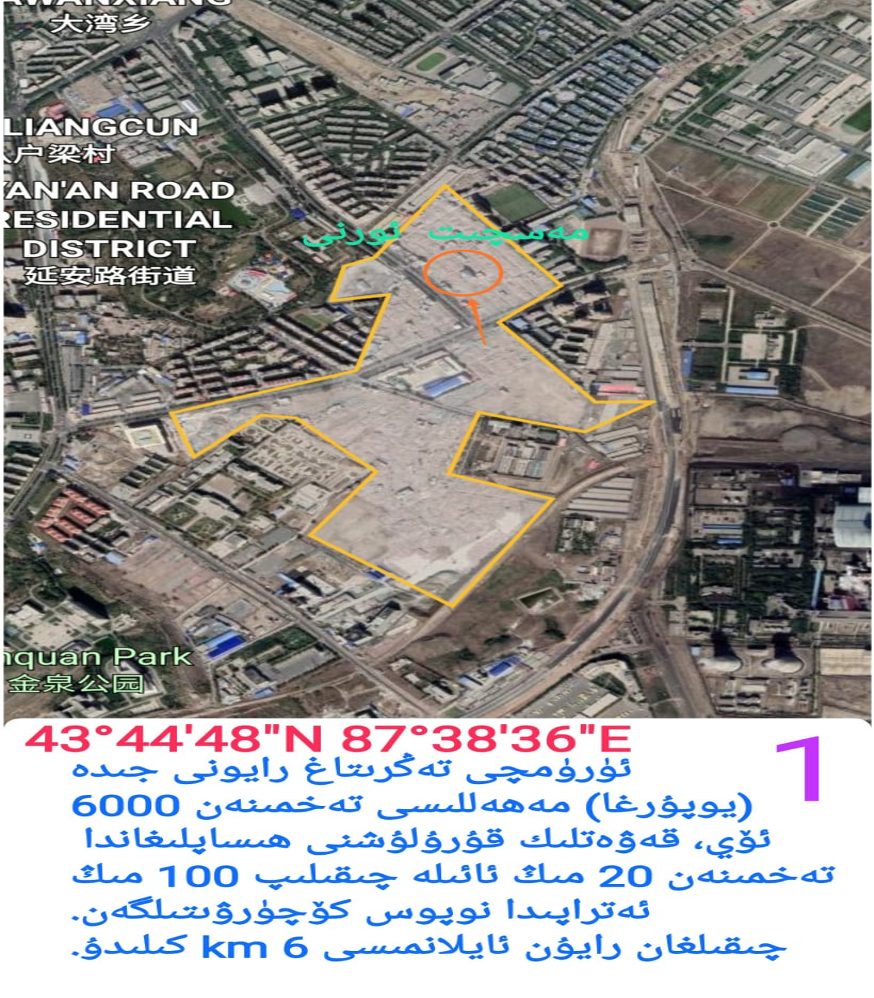
Urumqi Tengritagh District Jide (Yopurgha) neighborhood, approximately 6000 houses, around 20,000 homes were destroyed, relocating around 100,000 Uyghur population. The circumference of the demolished area is around 6 km.
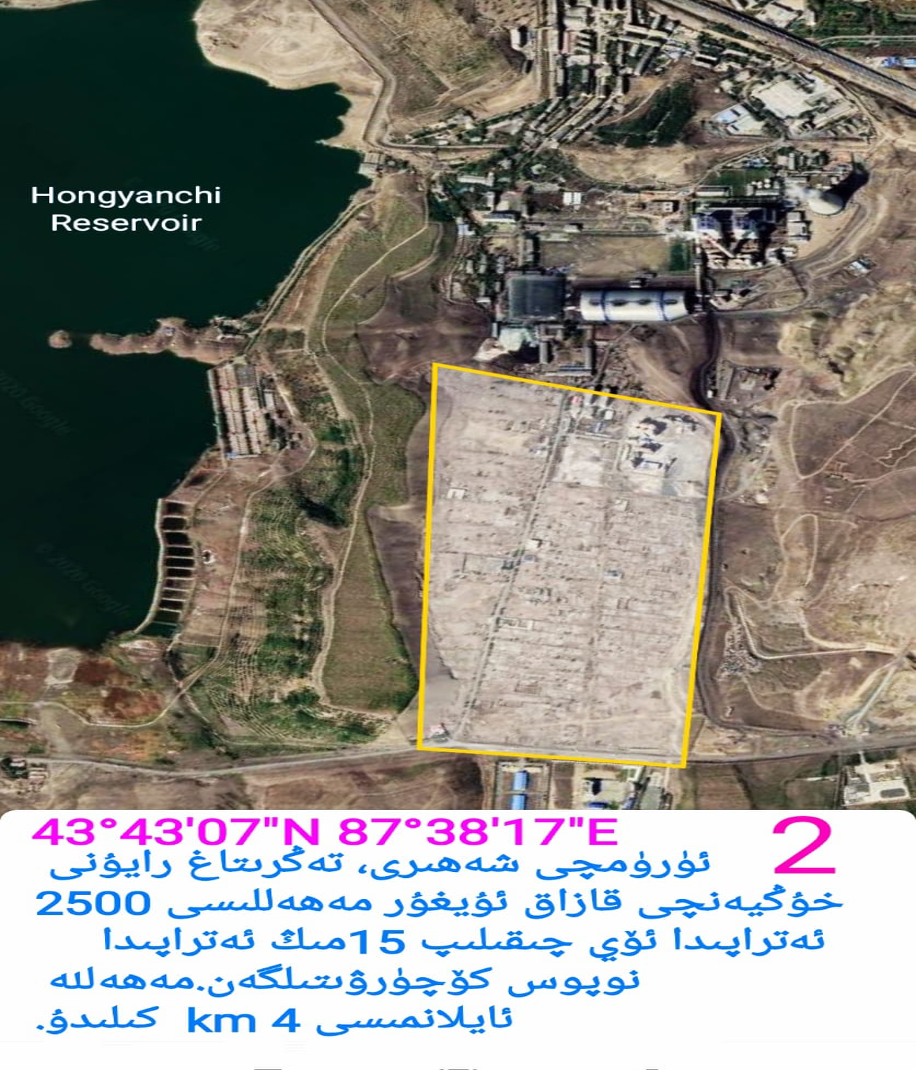
Urumqi city, Tengritagh District, Hong Yan Qi Kazak Uyghur neighborhood, around 2500 houses were destroyed, around 15,000 population were relocated. The circumference of the demolished area is around 4 km.
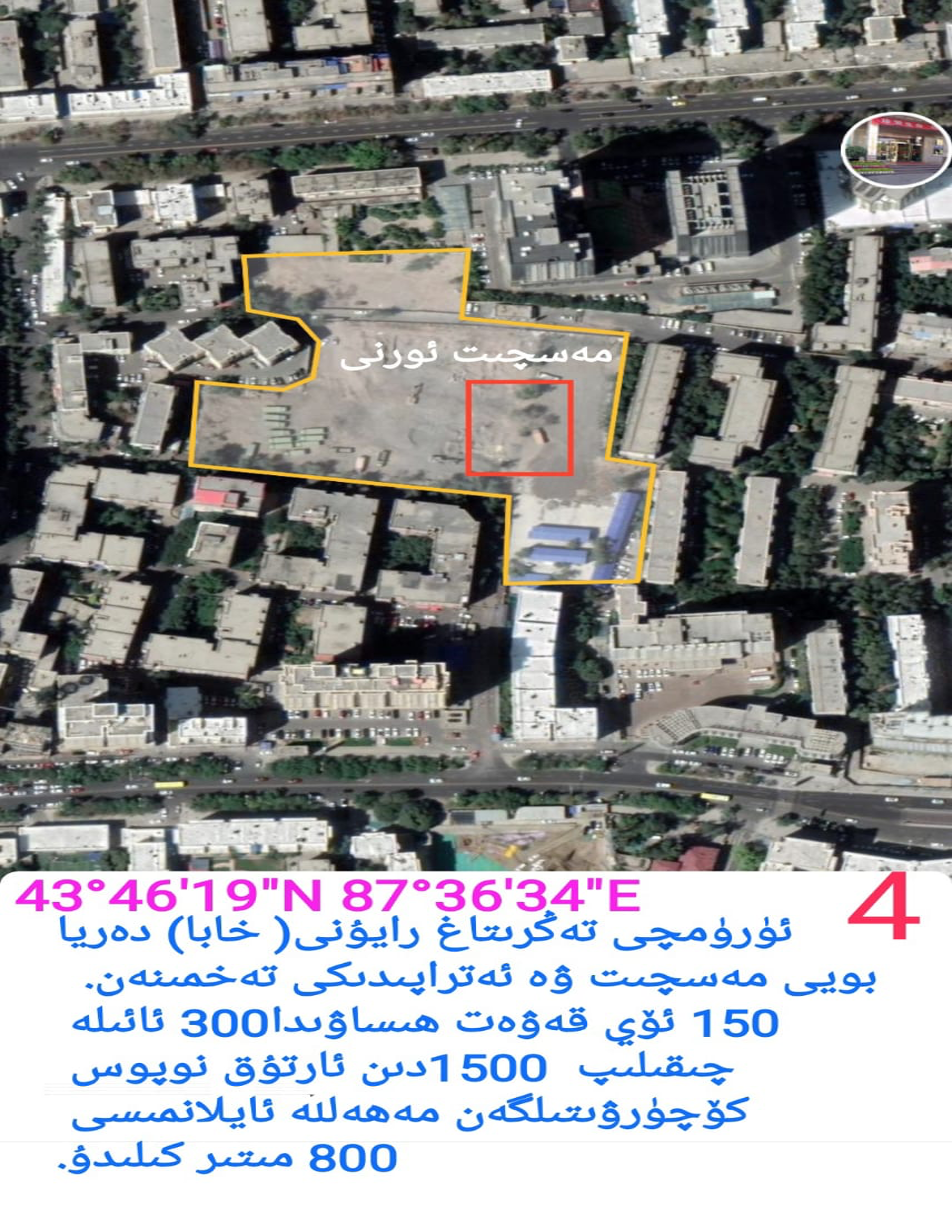
Urumqi Tengritagh District (Haba) Derya Boyi Mosque and surrounding areas, around 150 houses, 300 homes were destroyed and 1500 Uyghurs were displaced. The demolished area has a circumference of around 800 meters.
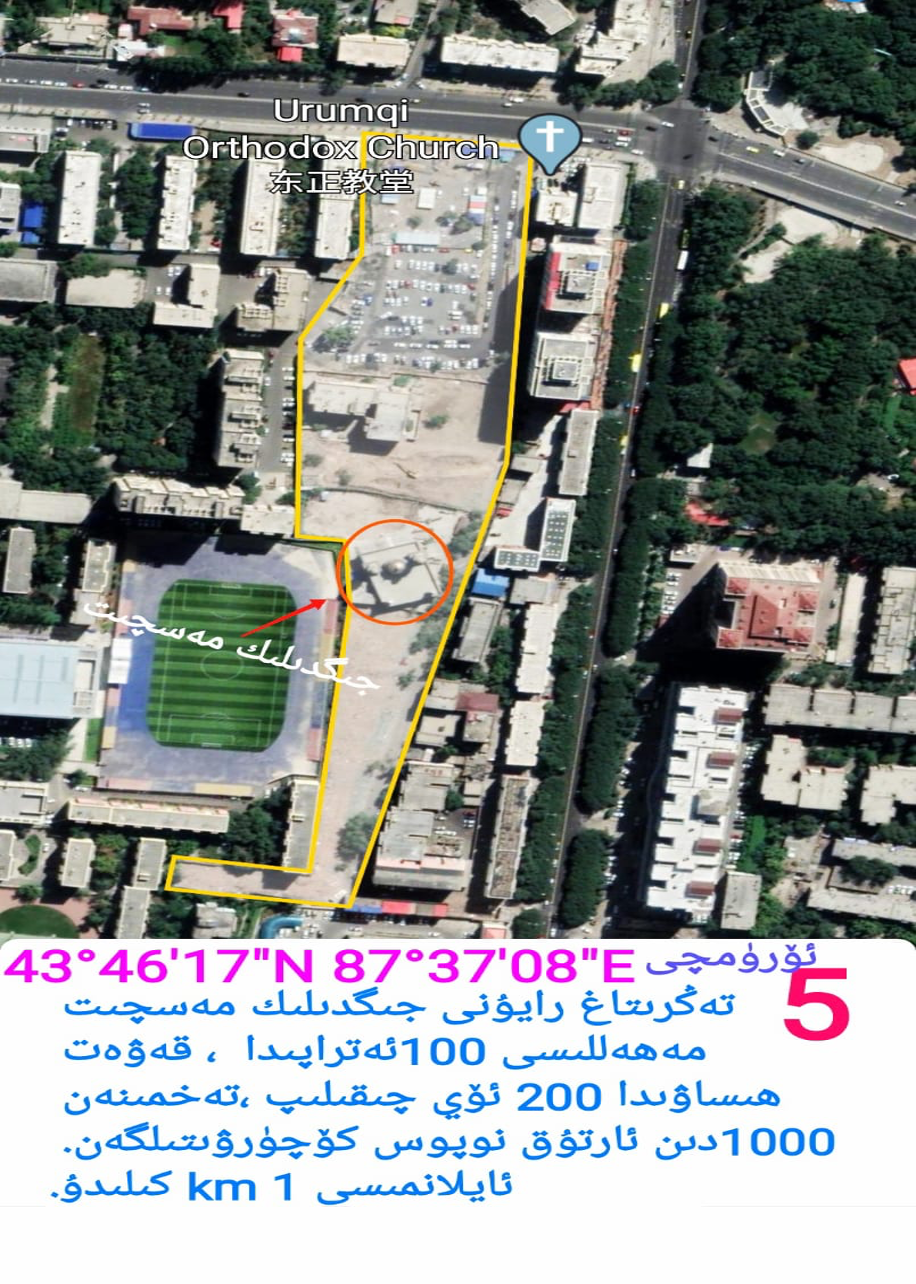
Urumqi Tengritagh District Jigdilik Mosque neighborhood, around 100 houses, 200 homes were demolished, around 1000 Uyghur population were displaced. The circumference is around 1 km.
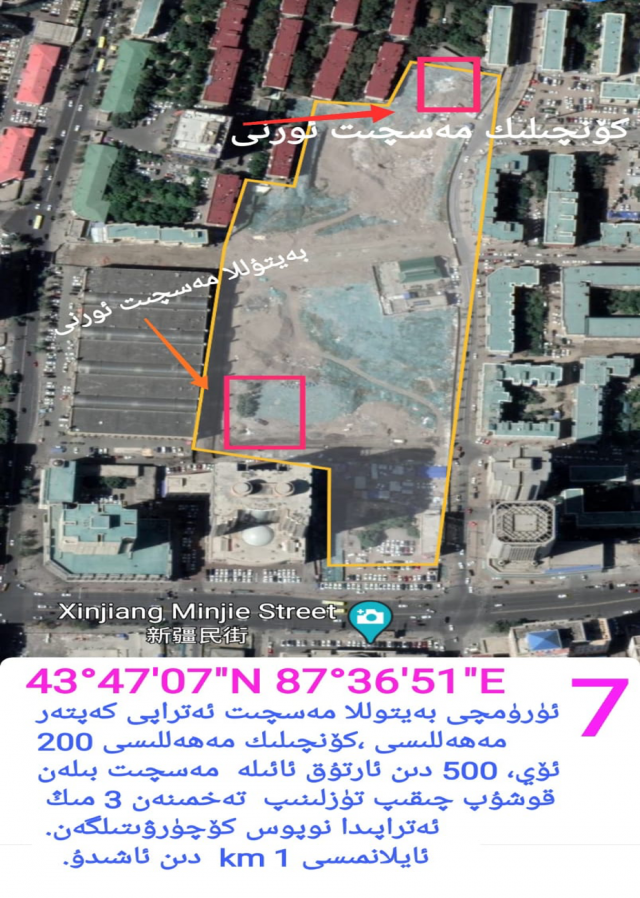
Urumqi Baitullah Mosque Kaptar neighborhood, Konqilik neighborhood, around 200 houses, 500 homes were demolished together with the mosque, around 3000 population were relocated. The circumference is around 1 km.
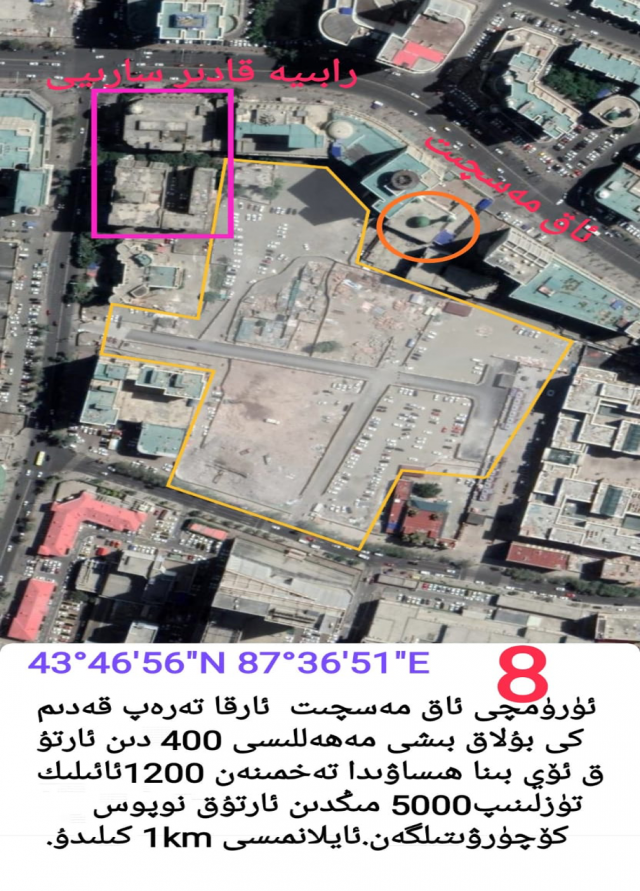
Urumqi Ak Mosque rear area ancient Bulak Bishi neighborhood, 400 houses, 1200 homes were demolished, more than 5000 population were relocated. The circumference is around 1 km.
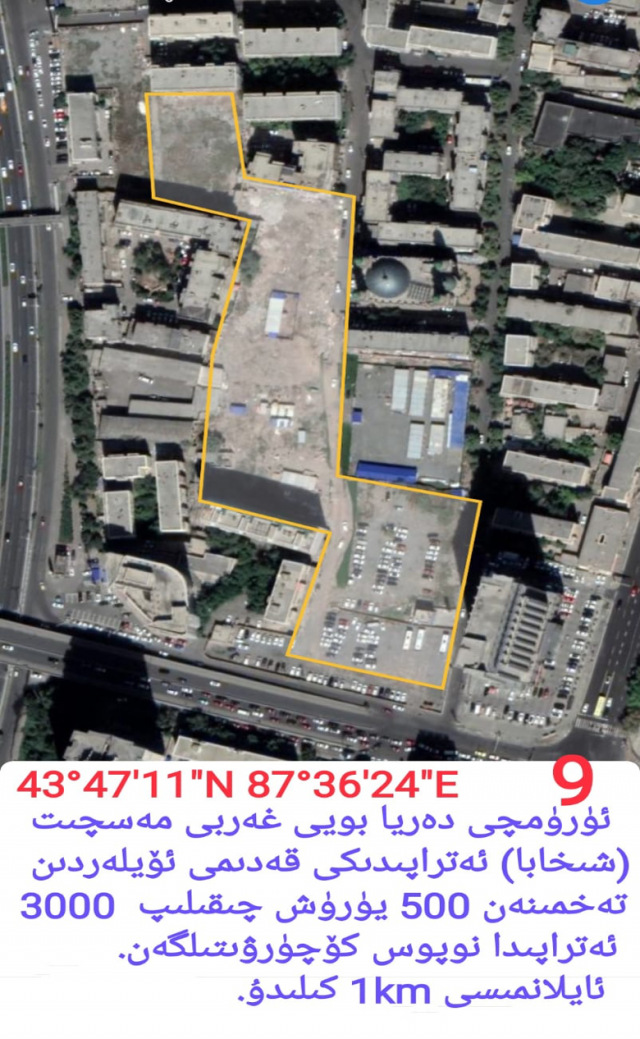
Urumqi Derya Boyi West Mosque (Shi Ha Ba) surrounding area, 500 ancient homes were destroyed, relocating around 3000 Uyghur population. The circumference is around 1 km.
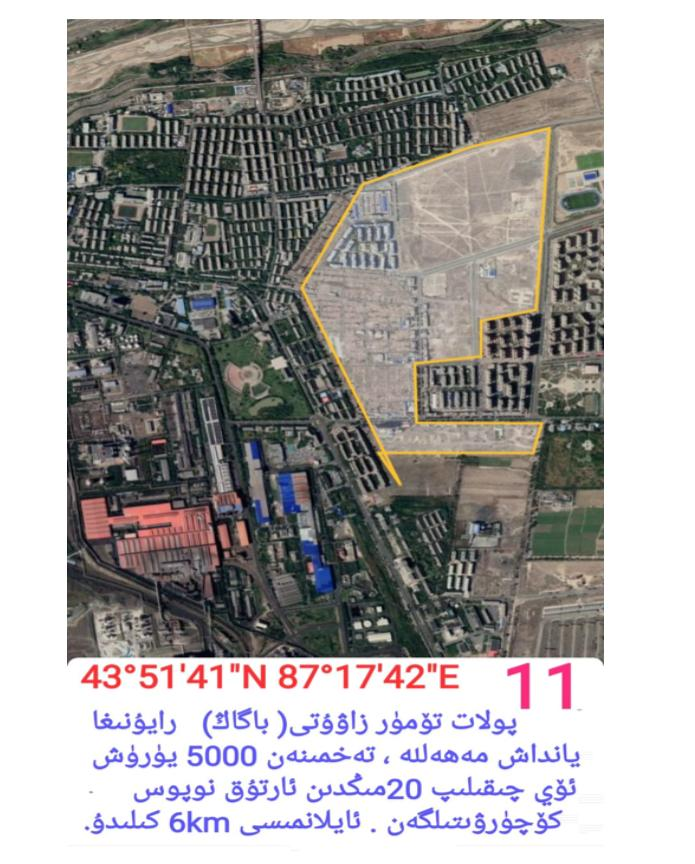
Steel Factory (Bagang) area neighborhood, around 5000 homes were destroyed, more than 20,000 population were displaced. The circumference is around 6 km.
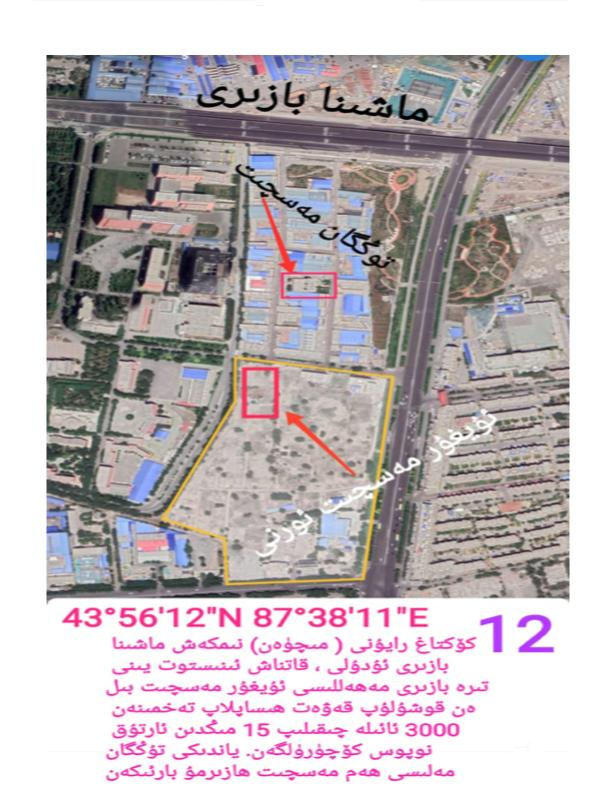
Koktagh area (Miquan) Nimkesh Mashina market opposite site, Transport Institute, Leather Market neighborhood. Together with the Uyghur mosque, around 3000 homes were destroyed and more than 15,000 population were relocated. The Dungan Mosque nearby is still standing.
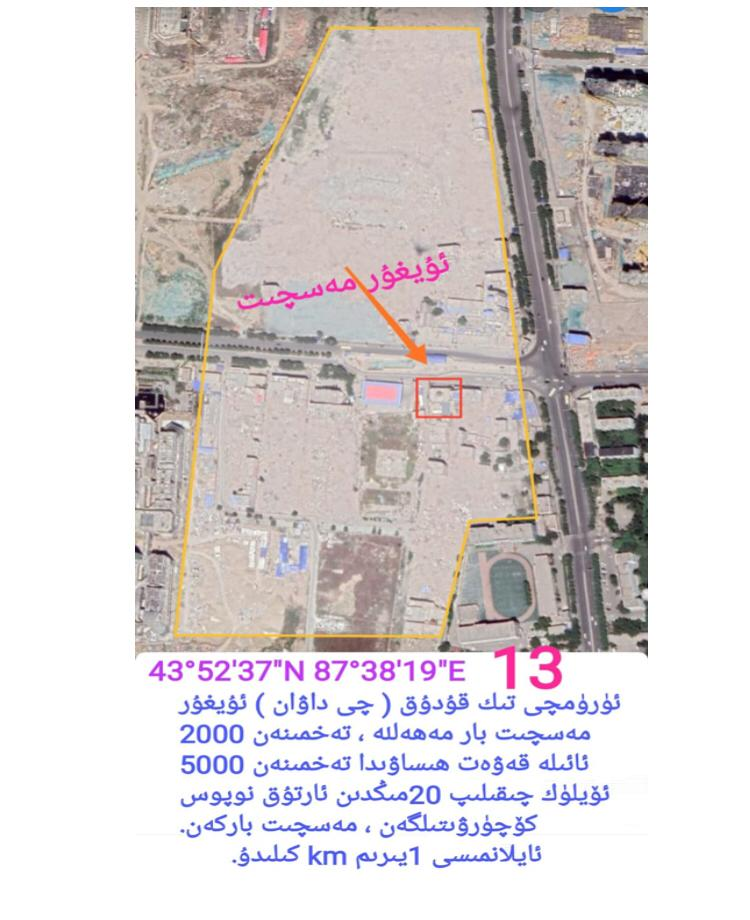
Urumqi Tik Kuduk (Qi Dawan) Uyghur mosque neighborhood, around 2000 houses, 5000 homes were demolished, around 20,000 Uyghur population were relocated. The mosque is still standing. The circumference is around 1 km.
This news was published on the Uighur Times Uighur language website on May 20, 2020. Translated into English by Uighur Times English Channel.
Discover more from Uyghur Times
Subscribe to get the latest posts sent to your email.


